Tuesday, October 23, 2012

NW


NW? Zadie Smith’s new novel? I waited seven years for you. Now that we have finally spent a few days together what am I left with?  Was it worth the weight? I say yes.
NW is not straight forward storytelling and good thing because given the story I could have thought I was reading a Jodi Picoult novel. Two girls, different classes, different ethnic groups,  different side of the tracks, societal issues, race issues, questions about marriage, parenthood and career, then people grow up. It’s the kind of story that when you compare the basic elements of the plot you know that this is a tale that is published every day but none of those books are written like NW.

The novel is stylized but not at all inaccessible. This is not two girls waiting for Godot. It’s very readable. There are the Big Life Events you expect for this type of an over the years, coming of age novel but they are not always presented in the way that we are used to. NW is more challenging than experimental. There is nothing in Smith’s technique that’s style over substance but there is a shuffling timeline and nontraditional storytelling that make good use of her excellent writing skills and do require the reader’s attention.
I like the way Smith writes. In contradiction to the plot (And how many 1000’s of novels fall into the same category an NW? Should I even be quibbling about that? Am I only doing so because Smith has taught me to expect so much from her? ) the writing in NW is ambitious. Smith’s play with structure is intriguing and creative.  Her ear for dialog and her dissection of London are brilliant. This is a big picture novel where ideas are in play and Zadie Smith manipulates it all.

 P.S. What do you think of the eye chart cover? Boring I say.

Thursday, October 18, 2012

Bring Up The Accolades

Hilary Mantel won the Man Booker again! She is one of only three people to ever win it twice and the only woman to ever do so. She is the only person to ever win for the first two novels in a planned trilogy AND she is my girl! And Bring Up The Bodies deserves to win.

 Go Hilary!!!

I cannot wait for book 3 in the Thomas Cromwell trilogy!

Thursday, October 4, 2012

Telegraph Avenue


One of the constants in Michael Chabon’s novels, aside from excellence, is his obsession with pop culture.  This has never been so much in evidence as in his new novel, Telegraph Avenue. You are never more than a couple sentences removed from another pop culture reference. However as the pop quotient has been ratcheted up in this new novel, the overall success of the story is a little down. That being said Telegraph Avenue is still worth reading but maybe you’re left not quite as satisfied as you have been with his previous novels?

Telegraph Avenue and the surrounding area is home to a varied lot including the business that is at the heart of novel and the soul of the community, Brokeland Records. The store is a poor but honest, sad but true, mod kid kind of place, a second hand record store.  As for the citizens think modern Frank Capra; the novel has the same positives and the same cynicism as in one of his movies.  Eccentricities rule, most people are basically good hearted (especially if they live paycheck to paycheck) and The Man could stick it to you at any time. As is usual in this Chabon novel the characters are treated with affection and are very well developed but you have seen them before. That isn’t usually the case with Chabon.

What I enjoyed the most about Telegraph Avenue was the sprawl. Watching Chabon manipulate the ever widening, deepening and intertwining storylines that build right from the beginning in this novel is pure pleasure. For me this is Chabons’ greatest strength and biggest appeal.  He has the talent and the smarts to build a world with its own defined history and relationships.

Saturday, September 15, 2012

The Bellewether Revivals


Why did I finish reading The Bellwether Revivals? Why didn’t I quit in chapter 2 when I realized I didn’t like any of these characters and that I knew this plot? I am not a proponent of finishing a book just because you have started it. Drop it I say! You have better books waiting for. Poor pitiful me was stuck at a swim meet with no other reading material. What was I going to do? Put the book down and talk to people? EEK. Heaven forbid.

You know I can’t even say that somewhere inside this just plain icky novel stuffed with unlikable characters is a good one trying to get out. The plot is a rehash of the poor, townie outsider seduced into joining the group of educated but immature, moneyed, morally questionable, twenty somethings with what they like to think of as radical ideas and too much time on their hands. Sound familiar? You’ve read it, seen a movie about it and watched that After School Special* that covered it.

Save yourself. Don’t be tempted by a nice cover or interesting blurb or sale price or even a Free sign. Let my mistake be your warning. Avoid The Bellwether Revivals and always keep a back-up book in the car.

*You have to be a certain age ---and maybe a girl--- to answer this question but didn’t you love, love, love an After School Special?

Thursday, September 13, 2012

The Mirrored World


If there is someone out there who doesn’t have a soft spot on the bookcase for The Madonnas of Leningrad? If there is and it’s because you haven’t read it okay---However you really need to get to it.--- but if it’s because you didn’t like it…? Then what the heck?

One of my favorite reading surprises of a few years ago (Was it 2007 maybe?) was The Madonnas of Leningrad by Debra Dean. I had not heard much about it prior to publication but when it came into the store I was intrigued and needed to read it right away. After that it was my great pleasure to put it into the hands of many customers.

Dean’s new novel, The Mirrored World, like Maddonas is set in Russia.* This time we are taken to St. Petersburg in 1736 where Dean tells us the story of St. Xenia. Also known as The Fool For Christ, Xenia was canonized in 1988. She had devoted herself to the betterment of the poor throughout St Petersburg.

In the novel, Dean uses a fictional narrator, Dashenka, to take us through Xenia’s story. They come together as girls when a fire devastates St Petersburg and 2,000 homes are destroyed. Dashenka’s family takes in Xenia, her sister and her Mother. (Is any of this based on fact? I don’t know. I have not researched Xenia so I’m going with Debra.) The two girls grow up close and happy. Eventually the time comes for all three girls to enter society.  One finds happiness, one finds money and one finds despair and they all find melancholy. When tragedy comes everything changes in ways no one can foresee. Their lives as women are not what their girlhoods trained them for.

Dean’s use of a narrator works well in The Mirrored World. Dashenka is the reader, the thinker in the family and the fact that she is a female as well immediately sets her as an outsider.  Her intellectual curiosity coupled with her devotion to Xenia allows us to trust her observations and opinions. Dashenka has no ax to grind, nothing to gain by elevating Xenia or tearing her down. The plot, the setting of 18th Russia and the many overlaps into the imperial court also fit nicely into the grand storytelling tradition of using a narrator.

The Mirrored World was such a pleasure to read. I adore how Debra Dean writes. It’s an overused description but I have to say that Dean has a great turn of phrase. You get lulled into the novel, you're enjoying every minute and WHAM! You are stopped dead in your tracks by how Dean phrases something.
 Dean has the knack of brevity down as well. Her words are carefully chosen to perfectly fit the time period, the mood, the characters and to do their job where the plot is concerned. I could certainly stand for her to be the kind of writer who puts out a book a year!

*In between The Madonnas of Leningrad and The Mirrored World came the short story collection, Confessions of Falling Woman. Obviously I didn’t read that book.

Sunday, September 9, 2012

A Lady Cyclist's Guide to Kashgar


Another debut novel, another winner. It seems like 2012 has been a good year for first timers. What do you think? The latest in this series of good reads for me is A Lady Cyclist’s Guide to Kashgar by Suzanne Joinson. 

The action in A Lady Cyclist’s Guide to Kashgar is set in 1923 and involves sisters Eva and Lizzie. They are on their way to do mission work in the Chinese governed, Muslim city of Kashgar. Lizzie despite her frailness is the zealot on this trip although she does have other passions. Eva, who has brought along her prized bicycle, is looking for adventure and a possible book contract for a travel guide. The third wheel on this journey is Millicent Frost. She is the expert, the one who is going to see them to Silk Road city of Kashgar.

There is also a contemporary side to the novel. Joinson has divided the action between the missionaries and the story of Frieda in present day London. ---Let’s take a full stop here for a moment. When have you ever read a novel that toggles between a historical setting and a contemporary one where the author manages to keep them both of equal interest? Does the word never come to mind? There must have been at least one or two books over the years that I have read that used that device and the Miss Modern Times part has been equal to the historical portion but I cannot for the life of me think of them.

Frieda is a professional expert on Islamic youth and little else. She is questioning her relationship with a married man, helping a homeless filmmaker get on his feet and inheriting things from some mysterious person she seems to have no connection with. Taybo is the homeless man. He is a refugee from Yemen whose visa has expired.

The locales, the period details and the politics in Lady Cyclist’s are all layered in with a casual simplicity that creeps up on you. No beating you over the head with research here. (Yipee!) The excellent characterizations in Lady Cyclist’s are successful fed by these details and the plot. Eva, Lizzie, Millicent and Frieda are all carefully drawn. Their very interesting quirks and their search for themselves all come about naturally but don’t assume that equates to a See Dick and Jane kind of obviousness. Joinson uses her talent to let you bring all of these particulars together and discover for yourself the depths of the idividuals and the relationships.

Can Frieda’s search for the reasons behind an unknown benefactor’s gift, the wonderfully interesting inventory of the inheritance, her relationship with Taybo and her everyday living problems really compete with the story of  three white women who take off in 1923 searching for all different freedoms in an unstable country? The answer is a surprising yes.  Hats off to Joinson for pulling that off! In The Lady Cyclist’s Guide to Kashgar she has married skillful writing with an emotionally and historically rich story about independence, abandonment and love.

Sunday, September 2, 2012

Cover Crush


A favorite new to me cover. I do not know when Bantam changed their cover of David Copperfield to this:
 
 but I am thrilled that they did. Look at that! It is terrific. The suit ties the image to the period and the lack of a body in the suit creates an everyman anonymity that echoes the novel.
 I think that this cover is very compelling and appealing. Cover designer Marietta Anatassatos you get an A++
And yes I did buy this edition of David Copperfield because of my cover crush regardless of the fact that I did not need another edition of D.C.

Saturday, September 1, 2012

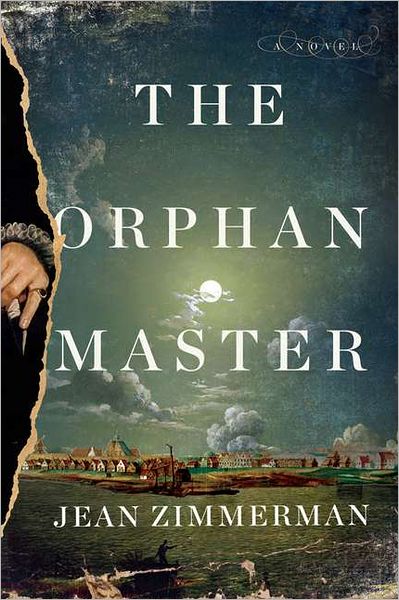
The Orphanmaster


  Historian Jean Zimmerman has written several very well received histories among them Love Fiercely, A Guilded Age Romance and The Woman of the House: How a Colonial She-Merchant Built a Mansion, A Fortune and a Dynasty. Her most recent book is also her first novel, The Orphanmaster.


Set in 1663 New Amsterdam, The Orphanmaster is the story of the murder of an 8 year old African-American slave, Piddy Gullee, the economics of orphans and the Charles the II sanctioned hunt for the murders of Charles the I. Sounds good right? Yes but there is one problem. Every bit of research Zimmerman has done for this novel is right there in your face.


Zimmerman doesn’t do herself any favors by not letting go of her historians need to educate mindset. At times (and by that I mean often) The Orphanmaster is an endless fact dropping storm settled over top of the plot. It is difficult to gain a reading momentum at the beginning of The Orphanmaster given the mini lessons that Zimmerman keeps interrupting her story with. It’s all really interesting but too much lecture and not enough action. There is a noticeable lessening of this here-is-all-my-research style but it never fully disappears into the novel.


On the plus side is Zimmerman’s main character, Blandine van Couvering and the setting. The potential in historical fiction for the heroine to be a way ahead of her time superwoman is always there. It’s a rare writer who can avoid that trap but Zimmerman does. In fact she does an excellent all way round with the characters. You are going to meet some interesting people in The Orphanmaster.  Maybe this is the element of the novel where Zimmerman’s background in nonfiction gives her a leg up on other writers. Certainly that same theory can apply to how well she recreates a very gritty, realistic 1663.


Despite my complaints about the heavy-handed history lessons they are interesting. I did learn a lot Ms. Zimmerman. The Orphanmaster is stuffed with very satisfying melodrama, creepiness and memorable characters.
 
P.S. The cover? A+

Sunday, August 26, 2012

How Some of my Reading Choices Are Made


Some guarantees that I will not read a novel:

1.       If it promises to alter, enhance or change my life.

2.       If it is described as: comic, funny or will make me laugh out loud.

3.       If it has a dog or cat on the cover.

4.       If it is set in Ireland.

5.       If it was praised by my friend Lily.

6.       If it has a blurb from Anita Shreve.

7.       If it is about Jane Eyre’s daughter, stepdaughter, cat, or gardener.

8.       If it is fiction about Jane Austen’s’ personal life.

9.       If it set in ancient Greece.

10.   If it is in any way about contemporary politics in the U.S.

Tuesday, August 7, 2012

Homesick


Homesick   by Roshi Fernando comes very, very close to being the novel her publisher (Random House) claims right on the cover that it is but alas… a novel it is not. However it isn’t quite the dreaded interconnected short stories either. It is more a series of life studies and it is wonderful. How is that possible when it isn’t successful as a novel or a short story collection?

In Homesick, Preethi is a part of the large, extended Sri Lankan family living in London. Her journey from child to adult is the underpinning for Homesick. Each chapter is devoted to a family member or members. Sometimes Preethi figures directly into the story of this relative sometimes not. As the title indicates these loosely written studies all draw on the immigrant experience.

The details of both the physical and emotional lives of her characters that Fernando packs into Homesick are impressive and intriguing. There is a vivid emotional range explored in Homesick that resonated for me. These lives that are not yet at home in London and no longer at home in Sri Lanka have compelling stories. Immigration is not a common occurrence in most of our lives but we’ve all been homesick. Fernando makes this experience as seen by families and individuals joyous, heartbreaking, sinister and always interesting and sympathetic.  

The physical manifestations of the characters new and old lives are a fascination throughout the book. Locations, foods, products, clothing, games, slang, pop culture and traditions are all prominent hallmarks in Fernando’s tales. These elements all work together to create an inescapable flux in these lives.

So what goes on here? As I’ve said Homesick is wonderful but it is not successful as a novel or as a short story collection. Why? In both cases Homesick is too sketchy, unfinished, unpolished to work when judging it by either form. But…when you take it for what it is an examination of lives undergoing massive change told in a disjointed storytelling way it’s really quite marvelous.

 I will absolutely read what Roshi Fernando writes next. My dissatisfaction with the form of Homesick was far outweighed by my enjoyment of her writing while reading it.

And yes. That is a beautiful cover.

Thursday, August 2, 2012

Who Is More Delicious?

Really? Anybody? Those are your choices?

People, people, people think.  Of course it is Myrna Loy. She is the most delicious, fabulous actress ever. Who is more charming? Let me get that one, nobody.

 Today is Myrna Loy day on Turner Classic Movies.

So call in sick and spend the day with the unparalleled Miss Loy.

Wednesday, August 1, 2012

The Newlyweds

I have to say I am not usually the audience for contemporary love stories. I’m too hard hearted and bitter to be objective—it’s a pitiful story. BUT.  I was looking forward to reading The Newlyweds by Nell  Freudenberger anyway. I have never tried her short stories, Lucky Girls, but I was a big fan of her novel, The Dissident. And. I completely heart the cover on The Newlyweds, magnificent.

The Newlyweds is the story of Amina, 24, and George, 34. Amina is a native of Bangladesh and George is an American living in Rochester when the meet via the internet. The stars align and the fall in love.  Both of them are searching for something other than what they have known and they seem to find it in each other.

Freudenberger has used the internet’s potential to bring anyone together to write this novel about a modern day mail order bride and mail order groom. It’s funny to think that this method of connection is so common now. How did that happen in such a short time?  Freudenberger makes good use of juxtaposing Amina and George’s similarities and differences, especially with Amina. Her longing for change parallels her homesickness very nicely. Also the struggle with a bond built in cyberspace verses the real, absolute bonds built over a lifetime.

The great strength of the novel is that despite cultural differences and family interference the trials and tribulations of Amina and George are not operatic. They are most impressively natural and everyday even including the Bangladesh angle. While Amina’s immigration and culture add to the complexity and tension of the couple’s relationship, not to mention the interest level for the reader, it is an important element of their relationship not the sole focus of it. The problems brought on by sex, work and family and equally important.

The weakness in this story is George. Unfortunate considering this is a two character tale with George being character #2. He is not as fully fleshed out as Amina and consequently not as engaging. Freudenberger has not given him any kind of a backstory or emotional pull that can compete with Amina’s.

If I view The Newlyweds as strictly Amina’s story I like it much better than if I think of it as a novel about a couple. Maybe that makes the whole thing unsuccessful?  Maybe but I did enjoy following Amina’s journey.

Saturday, June 16, 2012

The Coward's Tale

I could not help myself. I read it anyway. The facts were right in front of me, I ignored them. I knew it was going to end in tears but I did it anyway. I have no one to blame but myself. When I look back I know what my downfall was. It was the cover. Look at it. It’s great isn’t it?

In my defense I did not purchase this book. It was sent to me a gift. It was described by my friend as something she was positive that I would , “love and want to pass on!” She was half right.

Would I have selected The Coward’s Tale if I had come across it at my local? I would certainly have picked it up to look at---that terrific cover remember? However I would have read the back of the book and I think then that I would have put it down.

Whatever my friend. This is all speculation. I am not in procession of a Wayback Machine and I did read the book so I have to deal with it.

The Coward’s Tale is about a boy who is sent away to live with his grandmother. The boy becomes friends “with the town’s  begger-storyteller” who regales him with the town’s “lore”. I kid you not.  That is what happens in the novel and that is how the publisher describes it. In that casual, every town has one sort of way. I’m not sure that we have a beggar-storyteller in my town but then again we have downsized since the economy collapsed a couple years ago. Our beggar-storyteller may have been forced to take early retirement or a new position in the highway department.

So the author of The Coward’s Tale is Vanessa Gebbie. She is an accomplished author with two published short story collections to her credit. Oh no let me correct that. Vanessa Gebbie is the author of three published short story collections. The cover of The Coward’s Tale may proclaim that it is “a novel” but don’t you believe it. The Coward’s Tale is a short story collection using that old The Town’s Beggar-Storyteller  as a sloppy device that enables Gebbie (and her editor)to string short stories together and pretend that this is a novel.
Let my foolishness be a lesson to you.

Monday, May 28, 2012

Bring Up The Bodies

I think that I have proclaimed my deep love for HilaryMantel loudly enough and often enough to qualify me as her a stalker. So I was all prepared to adore her new novel Bring Up The Bodies and guess what? I did! ~~Sigh~~ Happiness complete.
So…first there was the superb, award winning Wolf Hall. Has everyone heard of this? Good. Has everyone read this? If not go do so we’ll be here still heaping accolades on Ms Mantel when you get back. If the rest of you have had the great good sense to read Wolf Hall we’ll move on.
In Bring Up The Bodies Thomas Cromwell is older, more seasoned and more pressured than ever. Marriage number two for his liege Henry is not working out. Queen Anne’s personality and son-less womb are not winning her any support at court and is alienating Henry. Henry’s eye is roving. He’s sees greener grass and it will fall to Cromwell to make it all happen. You knew that much before you got to page one but of course it’s the telling that makes Bring Up The Bodies so absolutely divine.
Hilary Mantel somehow produces magical writing with the same ease that it takes the rest of us  to open a can of tuna. Writing that all at once makes familiar facts suspenseful, creates humanity and understanding in the traditional bad guys of history and builds ambience and setting with brief, well placed descriptions of an object or a smell or the cut of a dress. At the same time Mantel is inside of Cromwell along with all the dead friends, family and foes he cannot shake loose of writing through him.
The amazing marriage of Hilary Mantel and Thomas Cromwell has already produced two magnificent novels: Wolf Hall and Bring Up The Bodies. The final book in this trilogy is in the works and it cannot arrive fast enough for me.

P.S. You could absolutely read and adore Bring Up The Bodies without having read Wolf Hall? Yes, but why would you want to?

Monday, May 14, 2012

Arlington Park

We all understand that you never know what goes on behind your neighbors’ curtains, right? We’ve learned this from relationships, novels and every Lifetime TV movie ever made. We got it. The yards in the neighborhood might be beautifully groomed, the car in the driveway the latest model, the children all smiles at the bus top but peel back the veneer and voila! The seamy underbelly of suburbia. This is the territory that Rachel Cusk covers in her novel, Arlington Park.

Have you read anything by Ms Cusk? She has the surgeon’s skill of cutting away and cutting away until the entire tumor is exposed and it serves her well in Arlington Park.  Cusk dissects the lives of four women who are far from old but whose youth is gone. They are all wives and mothers. Over the course of day, Cusk's plot illustrates the  varying states of unhappiness, paralysis, nursing slights and general discontent of her characters. Arlington Park is  where those whose dreams have always included an element of being “on the way up” discover the emotional cost of that life.
Cusk writes with uncompromising honesty about her characters. Yes she opens that older than dirt curtain idea  but that is only her first step in dissecting the relationships, choices, home lives and society of her women. Arlington Park is not a feel good novel of friendships tested among disparate women while they chew the fat over endless cups of tea. It’s a much darker story about not always likable people by a very talented writer

Sunday, May 6, 2012

Blue Asylum


If I’m poking around for something new to read and the words Civil War pop up, I move on. My interest in historical fiction from that period began and ended with Gone With The Wind. Then because I hearted the cover on Blue Asylum  so much I disregarded my embargo and read on. Once again judging a book by its cover has led me to reading happiness. Shallowness has so paid off for me over the years!

Essentially Blue Asylum is the story of a young wife, Iris, with abolitionist beliefs married to a southern slave owner who has her committed when she acts on her beliefs. Once at the island asylum of Sanibel Iris is subject to the treatments of an egotistical doctor, the fantasies of his son and is herself attracted to a traumatized Confederate soldier. There are unique touches to the whys, wheres and hows but emotionally it’s the usual pile on of drama after drama for a hoop-skirted heroine.

You could take that basic plot description and check Blue Asylum off as romantic soap opera. It is but it’s that and more in the hands of a strong writer like Kathy Hepinstall. This makes all the difference in the world my friends. Within the theater of the true to life  historical elements, the war, slavery and marriage laws Hepinstall is able to create interesting, period-accurate characters (Halleluiah!) whose personal dramas unfold engagingly and realistically against a well researched ambiance. The union of all these parts without any one component over powering the other makes for a rich, smart read.

Saturday, April 28, 2012

No I In Team? Who Cares?

Sometimes I am just the super proud Aunt who only has good will towards one. I am not always willing to be one of the spectators  clapping for every single kid participating--- and pretending to care about them.

Today was one of those days. I had no ill will towards any other competitor but I wanted only one to reign supreme and she did!

 Niece S had a spectacular meet and I am THRILLED for her!

There is no I in team but there is one in win my friends.

Thursday, April 26, 2012

The Secret River


It was the best of times it was… jail or Australia for William Thornhill. That’s the way the cookie is crumbling in author Kate Grenville’s novel The Secret River. Set in 1806, The Secret River is the story of a convict settlement in New South Wales. Forced by circumstances to steal, William is caught and wins the all expenses paid, one way cruise to an Australian penal colony. William’s life sentence is the re-making of him. He has been a petty criminal since childhood and avoiding the gallows in exchange for a new life for himself and his pregnant wife has the potential to take him from no-hope poverty to a chance.

Once in New South Wales, William begins the arduous process of going from convict/slave to freeman with help from his wife Sal and their children. Still struggling with the poverty that has dogged him all his life, he eventually stakes a claim to land along the Hawkesbury River. Alas even working himself up to being a landowner does not bring smooth sailing for William and Sal. His claim brings him in conflict with the native aborigines.  The uneasy coexistence between the white settlers and aborigines is in constant danger of tipping into violence. This relationship is the real heart of the novel.

Grenville has hit one out of the park. She has taken the classic settle the west novel and made it new and powerful with wonderful writing. The Secret River is a novel of escalating struggles and discord told in nimble and penetrating writing. I am hearting this riveting novel.

Saturday, April 21, 2012

One Big Damn Puzzler

One Big Damn Puzzler. The title says it all doesn’t? It’s got mod all over it. You know you are in for a circus of eccentric characters with some sort of bad government or evil billionaire or organization that secretly rules everyone’s lives hidden away at the center of the storyline and by the end of the novel Aunt Betty’s goat has been reunited with his childhood friend chicken (who barks) and Dimitri the bus driver/Greek immigrant has had his musical based on the life of Woodrow Wilson produced---and it’s a hit! The thought of it makes me wince tiredly.

But guess what? I was right and I was wrong.

This novel by John Harding is a circus of eccentrics and it does have bad government at its heart but I am happy to say that the likes of the goat, chicken and Dimitri do not materialize and therefore neither does my tiredness.  Instead One Big Damn Puzzler is a rambunctious but controlled adventure with a great deal of wit.

On an island paradise in the South Pacific, American lawyer William Hart has arrived. He has decided that the islanders are owed reparations from the U.S. government. The British had beat the Americans to the island and left behind pigs that now ruled the jungle, unfinished buildings, the English language and Shakespeare. The Americans hadn’t been such benign tourists. They left behind guns, land mines and a taste for soda. The island culture that resulted from natural development, the British and the Americans is unique. The evolution of the islanders could alter dramatically once again based on Hart’s law suit and would that be a good thing?

As Hart gets to know the island and its’ citizens author Harding keeps everything broad but still human. By doing this Harding saves One Big Damned Puzzler from being pure farce. His creation of the islands’ history has enough reality to be accepted as possible so that when he places his peculiar characters within it their behavior and lookout become on one level a natural progression of their historical experience.

I did enjoy One Big Damn Puzzler. Occasionally Harding seems a little too eager to point how amusing he can be but that is a minor complaint. This novel is a clever, well imagined look at a trampled over society that survived anyway.

Sunday, April 15, 2012

Island of Wings

Do you follow the Orange Prize? I do. Of all the literary prizes that I take note of the Orange Prize consistently yields me the most interesting things to read. I did used to have this same relationship with the Man Booker as well but that love affair has cooled recently. Anyway. This years’ Orange has given me a couple wonderful treats including Island of Wings by Karin Altenberg.


In 1830 the Reverend Neil MacKenzie and his wife Lizzie arrive on the island St. Kilda to do missionary work. The MacKenzies are hopeful, in love and happily expecting their first child. They are full of vigorous believe that their efforts to educate the populace of the island on all topics but especially God will set them all on the right path. And. If the island happens to turn more British during the process? So much the better. Don’t think that because the topic is religion and the island is in Scotland not Africa or Asia  that Island of Wings isn’t also about colonialism.

 St. Kilda was settled a thousand years before the MacKenzies arrived to do a makeover by Gaelic speaking Norsemen. Arriving at St Kilda the young couple is shocked to discover a place that seems medieval compared to the luxuries they left behind. Although only 40 miles off the coast of Scotland, the island might was well be 400 miles away for all the comfort that is there.  A few times a year the taxman would come to the island to collect revenue and to drop off supplies otherwise the islanders provide for themselves what they need. This is a hardscrapple place to live. The islanders are raggedly dressed, their homes are filthy, malnutrition is rampant and one in three newborns does not survive their first week.  

These challenges that met the MacKenzies are quickly compounded. Only Neil speaks Gaelic so Lizzie’s isolation is immediate. Lizzie’s child is still born and the wretched bleakness of the lives around her further forces Lizzie into her own world. Neil’s efforts to convert the natives are hardly successful and his plans to reorganize how they do their farming have dire consequences.  

In a spare writing style Karin Altenberg has done four things very well in Island of Wings: history, geography, people and politics.  She has given us intriguing historical details, a world impossible to imagine, characters that change not because they grow older but because of circumstance and experience and a powerful lesson in the politics of faith. Island of Wings is an impressive, thoughtful novel.